The Neurodiverse Couples Sex Therapy Workbook
Practical tools for intimacy, communication, and connection
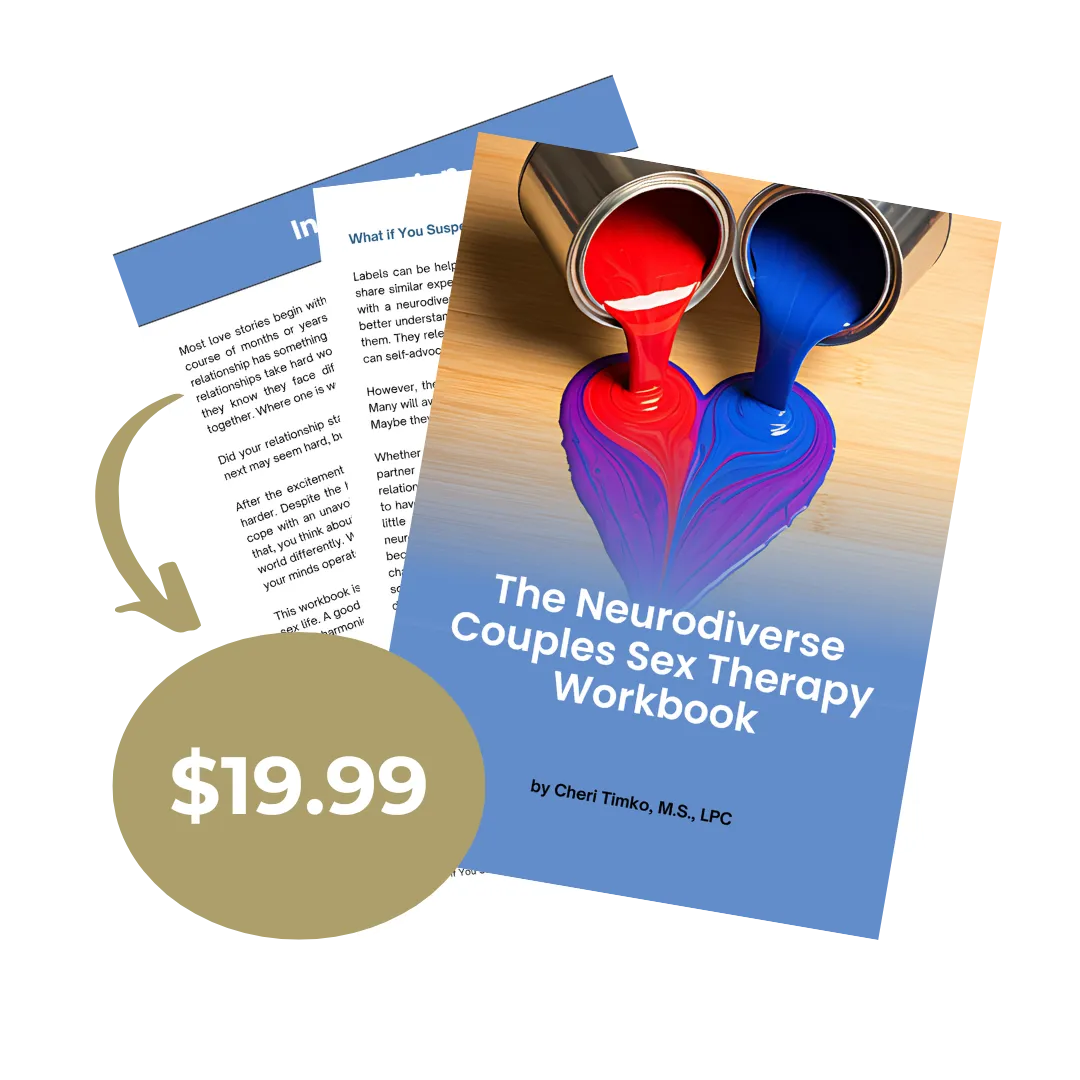
If you or your partner is autistic, has ADHD, is a highly sensitive person, or some combination, you may have noticed that standard relationship advice doesn't quite fit. The communication tips assume brains that work the way yours don't. The intimacy advice skips past sensory differences. And the conflict strategies seem designed for couples who never experienced rejection sensitivity or the words just failing them entirely.
The Neurodiverse Couples Sex Therapy Workbook was built especially for you.


This Is a Workbook You Use Together
This is a couples workbook. You and your partner will work through it side by side, at your own pace, with 28 guided activities that walk you through building the communication, connection, and intimacy that uniquely works for you.
You don't need a diagnosis to start. If one or both of you suspects you're neurodivergent, that's enough. An appendix on getting a diagnosis is included if and when you want it.
What You'll Work Through
The workbook is organized into the major areas where neurodiverse couples get stuck:
How neurodiversity shows up in your relationship
Communication skills, including finding your best shared means of communication and agreements for giving each other meaningful attention
Problem solving, negotiation, and conflict management, including what to do when words fail
Building connection without words, synchrony, emotional sharing, and daily check-ins
What gets in the way of affection and sex, including energy drains and sensory sensitivities
Talking about sex directly: sharing feelings, voicing concerns, and navigating a "no" without rejection
Joint sexuality: exploring your erotic templates, sexual preferences, and creating your own agreements
Planning for the future, designing the relationship that fits you, and building habits that sustain the changes you've made
Each exercise is concrete and specific. No abstract theory, no vague prompts. You'll end with insights and tools you can use right away
Who This Workbook Is For
This workbook is designed for you if:
One or both of you is neurodivergent, diagnosed or suspected
You struggle with communication, intimacy, or meeting each other's needs
You want practical, actionable tools rather than generic relationship advice
You're each open to trying new interactions
This is not a diagnostic tool, and it is not a substitute for therapy. It's a structured guide you can use on your own or alongside professional support.

What Makes It Different
The strategies are tailored to the actual challenges of neurodiverse relationships, not adapted from neurotypical advice. Everything is grounded in a neurodivergent-affirming interpretation of the research, and the workbook was reviewed by neurodiverse stakeholders before it reached you.
Don't Expect to Finish It in a Weekend
Some activities will land easily. Others, especially around sex and conflict, may take time and more than one sitting. That's the point. This is deliberate work, and the couples who benefit most are the ones who let the harder chapters take as long as they need. You can pick and choose which chapters you need, but it will take some time.
Every Couple Builds Their Own Version of Love
You didn't get a manual for your brain, and neither did your partner. But you can intentionally build a relationship that fits who you actually are. That work starts here.
Frequently Asked Questions
Do we need a formal diagnosis to use this workbook?
No. Suspected and self-diagnosed neurodivergence is enough. Appendix A covers getting a diagnosis if you decide to pursue one. If I'm being honest, a lot of neurotypical couples would benefit from this straightforward and concrete approach to relationships.
Is this only about sex?
No. The workbook covers communication, conflict, emotional connection, and daily relationship habits alongside affection, intimacy, and sex.
Can one partner use it alone?
Yes, but you'll get the best results if you do it together. This is a couples workbook, designed for partners working through it together.
Do we need to be in therapy?
No. The workbook can be used independently, although professional support can be valuable, especially when navigating significant conflict or a crisis.
Is this a substitute for couples therapy?
No. This is an educational workbook and is not a substitute for personalized therapy or mental health treatment.
What if we're neurodiverse and struggling, but not sure this covers our issue?
The workbook is broad by design, covering connection, communication, conflict, and intimacy. If your difficulty falls in those areas, there's likely a chapter and an exercise aimed at it.
The Neurodiverse Couples Sex Therapy Workbook
Get your copy now!
Disclaimer: This product is not intended to take the place of psychotherapy. It is designed to be completed alone or with a skilled psychotherapist. It is not recommended to complete with your spouse.
Affiliate Disclosure: This page contains affiliate links. If you make a purchase through one of these links, I may earn a commission at no additional cost to you.